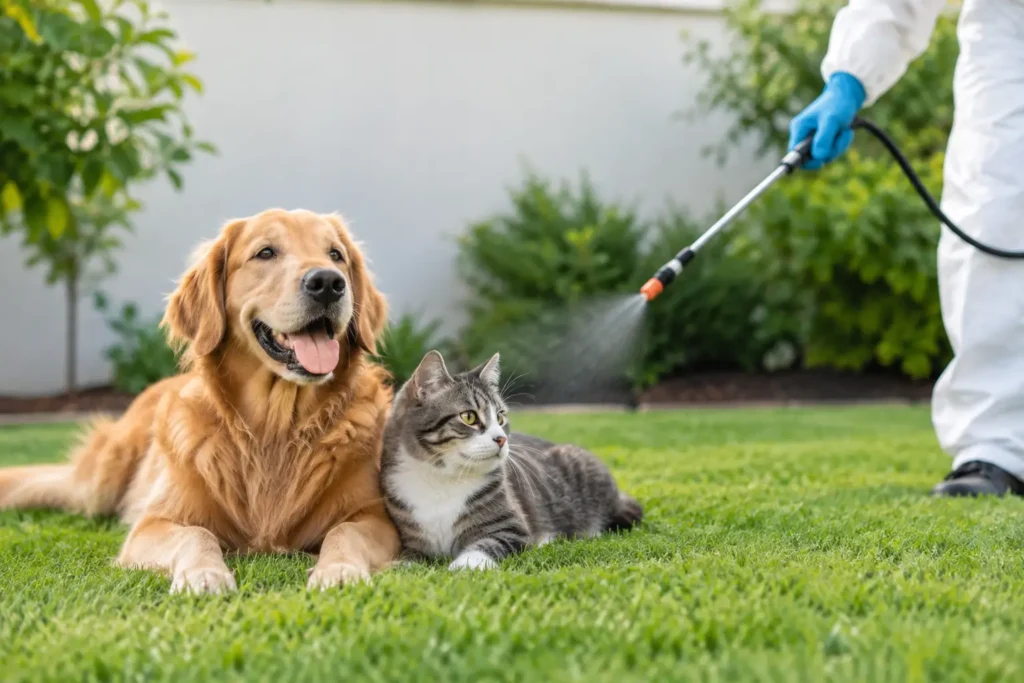
A roach treatment or ant problem should not force you to choose between pest relief and your pet’s well-being. Homeowners often search “how protect pets during spraying” when they have an appointment coming up and need clear answers fast. The good news is that professional pest control can be managed safely when you follow the treatment instructions, remove pets from the service area, and give products time to dry and settle.
The right precautions depend on the pest, the treatment method, and the animals in your home. A targeted crack-and-crevice treatment is different from a whole-home flea service, and a dog does not have the same needs as a bird, fish tank, or reptile enclosure. Your technician should explain exactly what is being treated, what preparation is needed, and when each area is ready for pets again.
How to Protect Pets During Spraying Before Service
Start by telling the pest control company about every animal in the home. That includes dogs and cats, but also birds, fish, reptiles, rabbits, hamsters, and any animal kept in a cage or tank. This helps the technician select an appropriate treatment plan and give instructions that fit your household.
Before the appointment, move pets out of the rooms being treated. If possible, arrange for them to stay with a family member, at daycare, or in a secure part of the home that will not be serviced. Keeping a pet in another room only works if that room is fully separated from the treatment area and the technician confirms it is safe to do so.
Pick up pet food, water bowls, treats, toys, chews, bedding, litter boxes, and portable crates. Washable items can be cleaned after service if needed. Do not leave bowls on counters or floors near treatment zones, even if they appear covered. Pets explore with their noses and mouths, so removing anything they may lick or chew is a simple, worthwhile step.
If treatment is planned for cabinets, pantries, or under sinks, clear pet supplies from those areas as well. Let the technician know if your pet has access to a specific cabinet, laundry room, garage, or enclosed patio. A good treatment plan accounts for how animals actually move through the property, not just where pests were seen.
Give Special Attention to Birds, Fish, and Reptiles
Birds are especially sensitive to airborne products and fumes. In many cases, it is best to remove birds from the home before interior treatment begins. Do not assume that covering a cage is enough protection unless your technician specifically says it is appropriate for the treatment being used.
Aquariums and reptile habitats need advance planning, too. Depending on the service, the technician may recommend covering and temporarily turning off air pumps that draw room air into the tank, or relocating the enclosure. Never make changes to a tank’s filtration or temperature system without understanding the needs of the animal. Ask for instructions before the appointment rather than trying to solve it at the door.
During Treatment, Keep Pets Completely Away
Pets should remain away from active treatment areas while products are being applied. This prevents direct contact with wet material and keeps a curious dog or cat from stepping into a treated spot, then grooming it off their paws.
A licensed technician should use products according to their label directions and focus treatment where pests live and travel. For many common household pest problems, that means targeted applications in cracks, crevices, wall voids, baseboard gaps, and other protected areas rather than broad spraying across open floors. This targeted approach helps control pests while limiting unnecessary exposure in living spaces.
Still, do not treat any application as harmless simply because you cannot see much product. Keep pets out until the technician says the area is ready. For some services, re-entry may be allowed after treated surfaces are completely dry. Other treatments, including certain flea services or exterior applications, may have different timing. The product label and your technician’s instructions should always control.
When Can Pets Return After Pest Control Spraying?
The most accurate answer is: when the treated areas are dry and your technician says they can return. Drying time can change with humidity, ventilation, the type of product used, and how much of the home was treated. Houston’s heat and humidity can affect how quickly surfaces dry, especially in garages, patios, and shaded exterior areas.
Open windows or run your HVAC system only if your technician recommends it. Extra ventilation may be useful after some indoor treatments, but it is not a substitute for waiting through the required re-entry period. Do not bring pets back simply because the chemical smell seems light or has disappeared.
When pets return, walk through the home first. Check floors, baseboards, favorite sleeping spots, and pet-accessible cabinets. Make sure food bowls and toys are clean and back in place. If your pet frequently licks a particular floor area or rests against baseboards, mention that behavior before service so it can be considered in the treatment plan.
Outdoor Spraying Requires Its Own Plan
Yard and perimeter treatments are valuable in Houston, where ants, mosquitoes, fleas, spiders, and other pests can quickly move from the landscape toward the home. They also require you to manage outdoor pet access.
Keep dogs and other outdoor pets inside or off the treated lawn, patio, and perimeter until the application has dried and the technician gives the all-clear. Bring in water dishes, toys, and movable beds before treatment. If your dog uses one small area of the yard repeatedly, point it out. The technician may be able to adjust the service approach or tell you when that spot will be available again.
Do not let pets drink from puddles, gutters, or outdoor containers after treatment. Refresh outdoor water bowls once the service is complete. If you have chickens, outdoor cats, or other free-roaming animals, discuss their routine ahead of time. Their access can make standard re-entry guidance more complicated.
Pet Safety Depends on the Type of Pest Treatment
Not every pest problem calls for the same method. This is one reason professional inspection matters. A cockroach treatment may include targeted applications and bait placements in areas pets cannot reach. Rodent control may involve traps, exclusion work, and tamper-resistant bait stations placed strategically. Termite treatment often focuses on the structure and soil around it. Each service has different preparation and safety instructions.
Flea control deserves particular care because pets are part of the problem and the solution. Treating the home without addressing fleas on the animal can lead to a quick return of activity. Talk with your veterinarian about appropriate pet flea prevention, then follow the technician’s preparation steps for bedding, rugs, upholstery, and vacuuming. Do not apply household pest products directly to your pet unless the product is specifically labeled for that animal and use.
Rodent bait is another area where professional placement matters. Never leave loose rodent poison where a pet can access it. If a pet may have eaten bait, a poisoned rodent, or an unknown pest-control product, contact your veterinarian or an animal poison support service immediately. Have the product name or service information ready if possible. Fast action is more useful than waiting to see whether symptoms appear.
After Spraying: Clean Carefully, Not Excessively
Once re-entry is approved, normal cleaning is usually fine, but avoid wiping treated cracks, crevices, baseboards, or other designated areas right away. Removing a treatment too soon can reduce its effectiveness and lead to repeat pest activity. Your technician can tell you which surfaces should be left alone and which can be cleaned normally.
Wash pet bowls, toys, and bedding that were left out by mistake or may have been exposed. Vacuuming may be recommended after certain services, especially flea treatments, but follow the schedule provided. For routine ant, spider, or roach service, heavy cleaning directly along treated edges can interfere with the protection you paid for.
Watch your pet as you normally would after service. Mild concern is understandable, but do not panic over routine behavior. Call your veterinarian promptly if you notice unusual drooling, vomiting, tremors, trouble breathing, weakness, or significant behavior changes, especially if you believe your pet had direct contact with a wet product or bait.
Questions to Ask Before Your Appointment
Clear communication prevents most pet-safety worries. Before treatment begins, ask whether your pets need to leave the home, how long they should stay out, whether food and water bowls must be removed, and whether there are special instructions for birds, aquariums, or reptiles. Also ask what areas will be treated and what cleaning should wait.
At Worden’s Pest Control, the goal is to handle the pest issue right the first time while giving households straightforward instructions they can follow. A customized treatment plan is safer and more effective than a one-size-fits-all spray.
Pests do not wait, but pet safety should never be rushed. Set up your pet’s temporary space before the technician arrives, ask every question you need answered, and let the treatment dry and work as directed. That gives your home the best chance at lasting protection without disrupting the animals that make it feel like home.