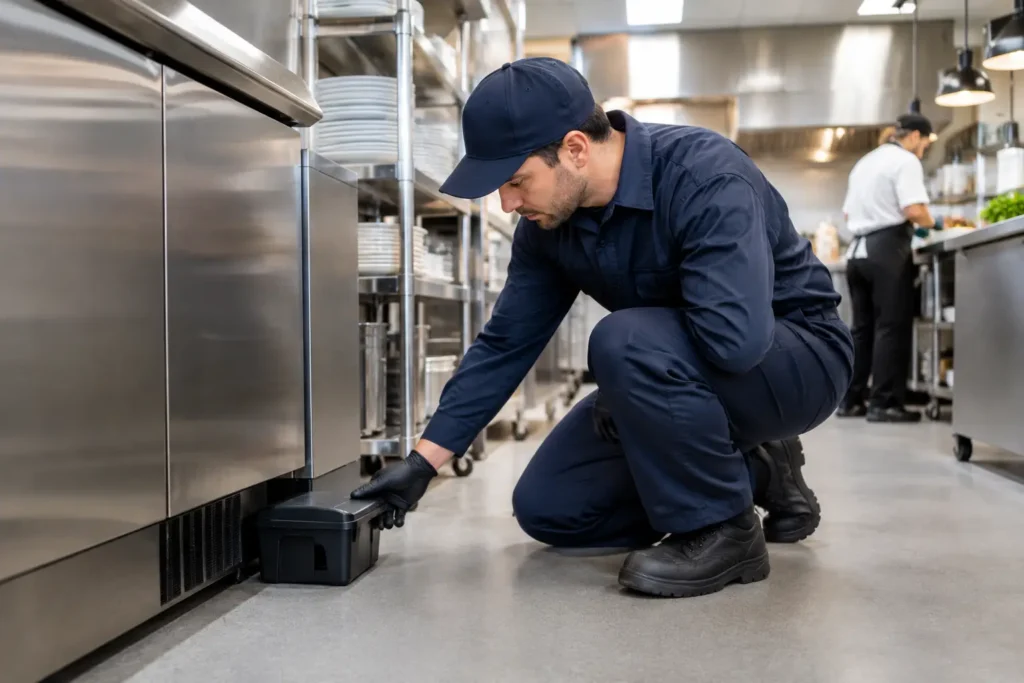
A single mouse sighting near a prep station can quickly become a bigger operational problem. Restaurant rodent remediation is about more than removing rodents from the building. It protects food, staff, guests, inspection outcomes, and the reputation you have worked hard to build.
For Houston-area restaurants, rodents can be a year-round concern. Heat, rain, construction activity, nearby dumpsters, and busy commercial corridors can all push rats and mice toward a warm building with food and water close by. Fast action matters, but a few traps alone rarely solve the source of the problem.
Why Rodents Create High Stakes for Restaurants
Rats and mice are not simply an unpleasant sight. They can contaminate food-contact surfaces, dry storage, packaging, utensils, and employee areas through droppings, urine, nesting material, and fur. They may chew wiring, insulation, plumbing lines, and equipment components, creating costly repairs and possible fire risks.
The customer-facing impact can be just as serious. Guests who see a rodent, droppings, or damaged food packaging may leave immediately and share the experience with others. A health inspection finding can also lead to corrective action requirements, lost business, or disruption during an already demanding service schedule.
The right response depends on the extent of activity and the layout of the property. A small mouse issue caught early may require targeted trapping, sanitation guidance, and sealing a few entry points. Repeated sightings, gnaw marks, or activity in storage and wall voids usually call for a more detailed inspection and ongoing monitoring.
Signs Your Restaurant Needs Rodent Remediation
Rodents are usually most active when the kitchen is quiet, so the problem may be present well before anyone sees an animal. Managers and staff should take new signs seriously, especially if they appear near food storage, dishwashing areas, utility rooms, bar stations, or dumpsters.
Common evidence includes small dark droppings, grease marks along walls, shredded paper or insulation, chewed boxes, teeth marks on plastic or wiring, and a stale or musky odor. You may also hear scratching in ceilings or walls after closing. Small gaps around pipes, receiving doors, floor drains, and utility penetrations can offer enough space for mice to enter.
One important distinction: cleaning up evidence is necessary, but it does not remove the infestation. If new droppings keep appearing after cleaning, rodents are still active. That is the point to schedule a professional inspection rather than hoping the issue fades on its own.
Restaurant Rodent Remediation Starts With Inspection
Effective remediation follows the path rodents use to get inside, feed, hide, and reproduce. A licensed technician should inspect both the interior and exterior of the property, looking beyond the area where the first sighting happened.
Inside, the inspection may focus on dry storage rooms, coolers, equipment voids, dropped ceilings, mop closets, employee break areas, receiving zones, and plumbing access points. Outside, attention should go to dumpster placement, grease areas, landscaping, wall penetrations, rooflines, exterior doors, and cracks near the foundation.
The goal is to identify three things: active rodent pressure, likely entry points, and conditions that make the restaurant attractive. This approach avoids wasted effort. Placing traps in the dining room will not solve activity that is beginning at an unsealed receiving door or a gap behind a utility line.
Removal Must Be Targeted and Documented
After inspection, targeted trapping and monitoring can reduce the active rodent population. Placement matters. Devices should be positioned in protected, strategic locations where rodents travel, not scattered where they can interfere with staff, guests, or daily operations.
For restaurants, safety and discretion are essential. A professional service plan considers food-handling rules, equipment access, employee traffic, and the need to keep treatment measures out of public view. Technicians should also communicate what was found, where activity occurred, and what the management team needs to address between visits.
Rodent activity does not always stop after one service. If an exterior population remains high or a structure has multiple access points, follow-up visits may be needed to check devices, track results, and adjust the plan. Consistent monitoring is especially valuable for restaurants near shared commercial spaces, older buildings, drainage areas, or active construction.
Exclusion Keeps the Problem From Returning
Exclusion is often the difference between temporary relief and long-term control. Rats and mice can enter through surprisingly small openings, including gaps around pipes, worn door sweeps, damaged vents, loose screens, and openings around utility lines.
A remediation plan should prioritize practical repairs that reduce access without disrupting operations. That may include sealing gaps, improving door sweeps, screening vents, repairing damaged areas around loading doors, and addressing openings behind equipment or near plumbing. Some repairs may fall to building ownership, which is why clear documentation is helpful for restaurant tenants and property managers.
Sanitation Supports Every Treatment Plan
Even the best trapping and exclusion work is harder when rodents have easy access to food, water, and shelter. Restaurant sanitation is already a major daily responsibility, but rodent prevention requires attention to the places that are easy to miss during a busy shift.
Keep dry goods in durable sealed containers when possible, rotate inventory, and remove damaged packaging quickly. Clean crumbs and grease from behind equipment, under shelves, and around floor edges. Cardboard should not accumulate in storage or receiving areas, since it can provide both nesting material and cover.
Outdoor conditions matter, too. Dumpster lids should stay closed, spills should be cleaned promptly, and garbage areas should be kept as tidy as possible. If a dumpster sits very close to a door or wall, management may need to review placement with the property owner or waste provider. The right setup varies by site, but reducing hiding spots and food access lowers rodent pressure.
Give Staff a Simple Reporting Process
Your team does not need to become pest control experts, but they should know what to report and who to tell. A quick report of droppings, chewed packaging, a damaged door sweep, or a live sighting allows management to act before the issue expands.
Ask employees not to move traps or apply store-bought pesticides without approval. Improper products and placement can create food safety concerns, interfere with professional monitoring, and make it harder to determine where rodents are actually traveling. Instead, record the date, location, and type of evidence found. A clear log helps management and the technician spot patterns.
When a Sighting Requires Immediate Action
A live rodent in a kitchen, food storage area, or dining space deserves same-day attention. Isolate or discard any food and packaging that may have been contaminated, clean and sanitize affected surfaces according to your food safety procedures, and document the incident for management.
Then arrange a professional inspection as soon as possible. Avoid relying on one quick cleanup or a single trap as proof that the issue is over. The next steps should address the immediate concern while identifying the route and conditions that allowed the rodent inside.
For restaurants that need responsive, practical help in Greater Houston, Worden’s Pest Control can inspect the property, build a targeted rodent control plan, and help identify exclusion and sanitation priorities. Pests do not wait for a slow week, and neither should your response.
A clean restaurant should feel protected from the back door to the dining room. When rodent evidence appears, handle it early, document it carefully, and fix the conditions behind it. That protects more than your next inspection. It protects the confidence guests place in every meal you serve.